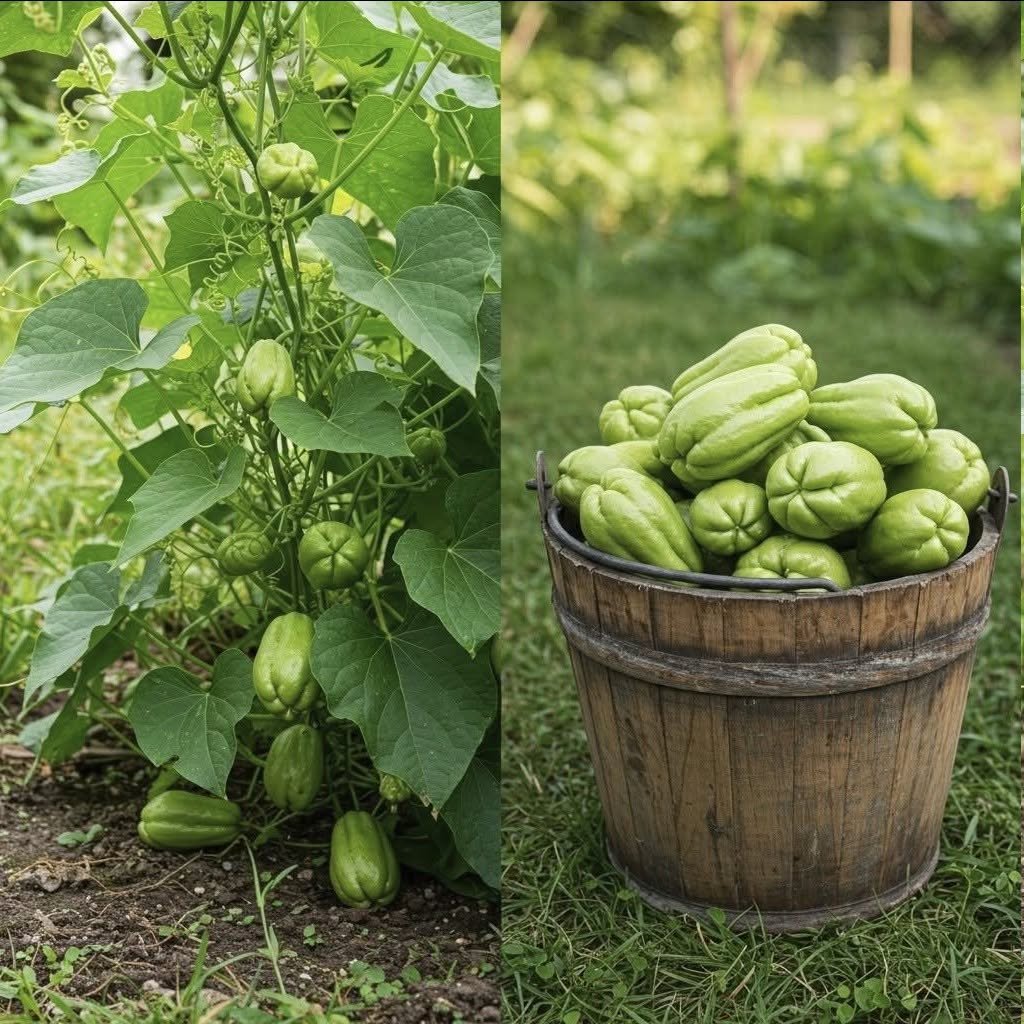
Imagine stepping onto your terrace and picking fresh chayote from a lush green vine growing right outside your home! Even if you don’t have a large garden, you can grow this productive climbing vegetable in a container with the right care and a sturdy support.
Chayote, also known as vegetable pear or mirliton, is a popular edible plant with green, pear-shaped fruits. Its vigorous vines can cover a trellis, making it an excellent choice for gardeners who want to grow more food in a limited space.
With a large pot, fertile soil, regular watering, and plenty of sunlight, you can give your chayote plant a great start and encourage healthy growth throughout the growing season.
Why Grow Chayote on Your Terrace?
Growing chayote at home offers several benefits:
- Saves space: Train the vine vertically instead of allowing it to spread across the terrace.
- Produces edible fruits: Harvest fresh chayote for soups, stews, salads, and cooked dishes.
- Creates a green corner: Its broad leaves can turn a bare terrace into a lush growing space.
- Requires simple equipment: A large container and a sturdy trellis are the main essentials.
- Offers a rewarding gardening experience: Watch the plant grow from a sprouting fruit into a vigorous climbing vine.
Materials You’ll Need
Before planting, prepare the following:
- 1 mature, healthy chayote fruit
- 1 large container, ideally 40–60 liters or larger
- High-quality potting mix
- Mature compost
- A sturdy trellis or climbing frame
- Water
- Balanced vegetable fertilizer, if needed
- Gardening gloves and pruning shears
Choose a pot with drainage holes to prevent excess water from collecting around the roots.
Step 1: Choose a Healthy Chayote
The easiest way to start a chayote plant is to use a mature fruit that is firm and free from rot or mold.
Chayote is unusual because its seed generally germinates inside the fruit. Given suitable conditions, a shoot emerges from the broad end.
If your fruit has already started sprouting, you can prepare it for planting. Otherwise, keep it in a warm location away from harsh direct sunlight while waiting for it to sprout. This may take several weeks.
Choose a healthy fruit from a reliable source for the best chance of success.
Step 2: Prepare a Large Container
Fill your container with well-draining potting mix enriched with mature compost.
Chayote develops a vigorous root system and can grow into a large vine, so avoid using a small flowerpot. A container of at least 40–60 liters is a practical starting point, although more space can be beneficial.
Place the pot where the plant can receive around six hours or more of sunlight daily, if possible.
In very hot climates, protect the container from excessive afternoon heat because the soil in pots can dry out quickly.
Step 3: Plant the Sprouting Fruit
Position the chayote fruit at a slight angle, with the sprouting end above the soil.
Cover only the lower portion with potting mix, leaving the upper part and emerging shoot exposed. Burying the entire fruit can increase the risk of rotting.
Water gently to moisten the soil without saturating it.
Keep the potting mix evenly moist while the plant establishes itself. Make sure excess water can drain freely.
Step 4: Build a Strong Trellis
A sturdy trellis is one of the most important parts of growing chayote on a terrace.
The vine produces long climbing stems with tendrils that attach to nearby supports. Without guidance, it can spread across the floor and become difficult to manage.
Install a secure trellis, climbing frame, or suitable vertical support near the pot. Guide the young shoots toward it as they develop.
Remember that mature vines can become heavy when covered with leaves and fruit. Anchor the structure safely, especially on exposed terraces where strong winds may occur.
Step 5: Water Regularly
Chayote needs consistent moisture to support vigorous growth and fruit development.
Check the soil frequently during warm weather. Water thoroughly when the upper layer begins to dry, allowing excess water to escape through the drainage holes.
Container-grown chayote may require more frequent watering than plants growing in the ground.
Avoid both extremes: letting the soil become completely dry for prolonged periods and keeping it constantly waterlogged.
A layer of organic mulch on the soil surface can help retain moisture, provided it is kept away from the fruit and stem base.
Step 6: Feed Your Plant Naturally
Chayote grows well in fertile soil rich in organic matter.
Mix mature compost into the potting medium before planting. During active growth, you can supplement the soil with a balanced vegetable fertilizer, following the manufacturer’s directions.
Avoid applying excessive nitrogen. Too much nitrogen can encourage leafy growth without necessarily improving flowering or fruit production.
Healthy plants need balanced nutrition, adequate sunlight, appropriate temperatures, and consistent moisture.
Step 7: Train the Vine as It Grows
As the vine lengthens, gently guide its stems along the trellis. Spread the growth across the support to encourage good airflow and make harvesting easier.
Remove damaged or diseased leaves when necessary, and keep the area around the container free from fallen plant material.
Avoid unnecessary heavy pruning because healthy foliage helps the plant produce energy for flowering and fruiting.
If the vine becomes too large for your terrace, redirect the growing tips along the support rather than allowing them to tangle around other plants.
Step 8: Encourage Flowering and Fruit Production
Chayote generally prefers warm weather and a long growing season. The timing of flowering and fruit development depends on the variety, climate, sunlight, and growing conditions.
If your plant produces plenty of leaves but few fruits, check the following:
- Does it receive enough sunlight?
- Is the weather warm enough for active growth?
- Is the container large enough?
- Is the soil staying moist without becoming waterlogged?
- Are you using too much nitrogen fertilizer?
Allow the plant time to mature. A young vine may need several months before it begins producing a harvest, and fruit production is not guaranteed in every climate or season.
Step 9: Harvest Fresh Chayote
Chayote fruits are usually harvested while they are still tender and before they become overly mature.
When the fruits reach a suitable size, use clean pruning shears to cut them from the vine. Avoid pulling or twisting them forcefully, which could damage the plant.
Check the vine regularly once fruit production begins. Harvesting at the right stage gives you tender vegetables that are easy to prepare in the kitchen.
Fresh chayote can be steamed, boiled, roasted, sautéed, or added to soups, stews, and vegetable dishes.
Common Mistakes to Avoid
For Complete Cooking STEPS Please Head On Over To Next Page Or Open button (>)