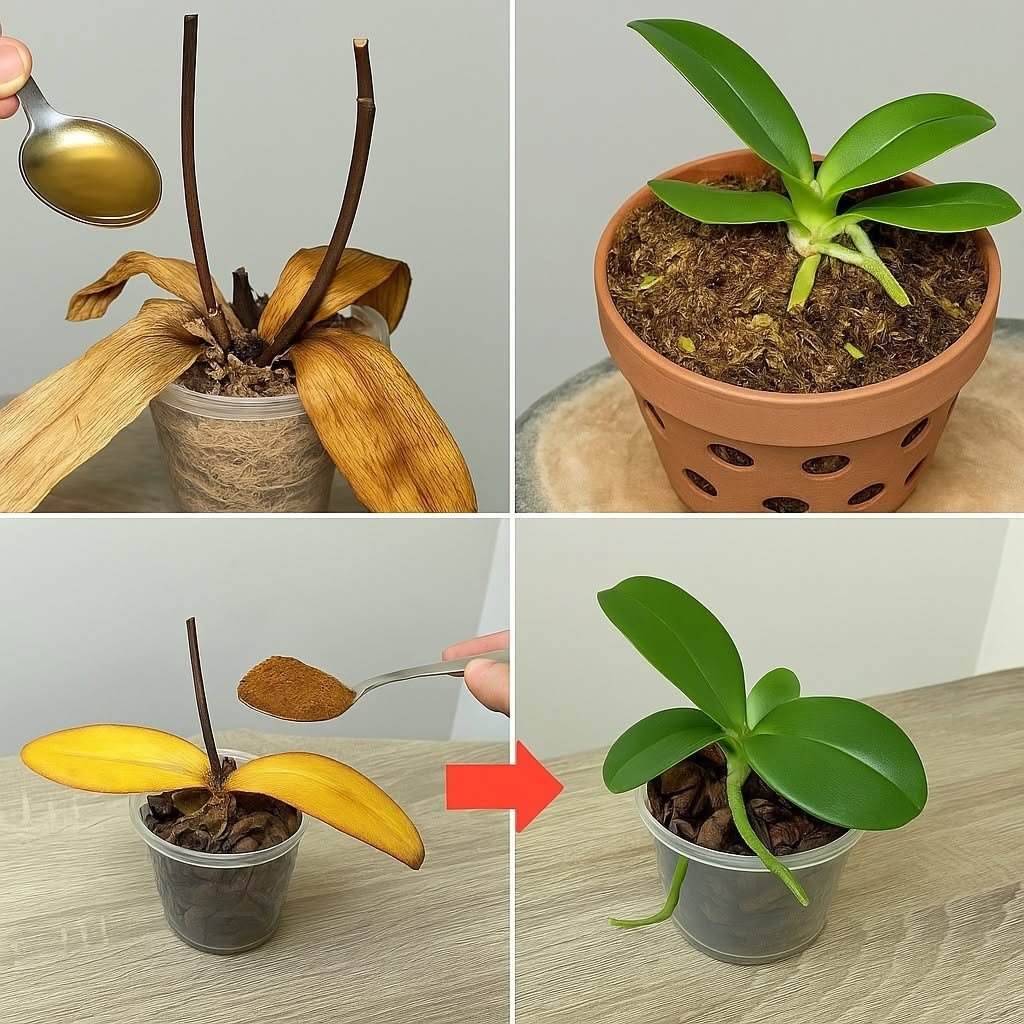
Orchid Roots?
Many online gardening tips recommend ingredients such as cinnamon, sugar, coffee grounds, or baking soda to revive struggling plants. However, these ingredients are not interchangeable, and none is a reliable cure for dead orchid roots.
Cinnamon: Some orchid-care guidance mentions cinnamon for certain minor rot-management situations, but it is not a root-repair treatment. Avoid coating healthy roots with household powders, which may dry out or irritate plant tissue.
Sugar: Adding sugar directly to the roots or potting medium is not a proven way to restore damaged roots and may encourage unwanted microbial growth.
Coffee grounds: These are not a suitable substitute for an airy orchid potting mix or a fertilizer formulated for orchids.
Baking soda: Avoid applying it to orchid roots. It can alter the growing environment and introduce sodium that may harm the plant.
The most reliable approach is to remove rotten roots, improve drainage, use fresh orchid medium, and correct the watering routine.
How to Encourage Your Orchid to Bloom Again
Once your orchid is growing healthy roots and leaves, you can focus on flowering.
Use the Right Light
Insufficient light is a common reason orchids fail to bloom. Provide bright, indirect light suited to your orchid species.
Choose a Suitable Fertilizer
Use a fertilizer formulated for orchids and dilute it according to the label. Many orchids do better with regular, weak feeding than with large doses.
Do not fertilize a severely stressed or diseased orchid until it begins to recover. Flush the potting medium occasionally with plain water to reduce fertilizer salt buildup.
Maintain Suitable Temperatures
Some common orchids, including Phalaenopsis, benefit from a modest difference between daytime and nighttime temperatures. The exact conditions depend on the species.
Avoid Overwatering
More water does not mean faster growth. Orchid roots need both moisture and oxygen. Water according to the condition of the potting medium rather than following a rigid daily schedule.
Be Patient
A recovering orchid may need weeks or months to produce new growth and flower again. Blooming depends on the orchid’s species, age, health, light, and growing conditions. No care method can guarantee flowers throughout the year.
Common Orchid Care Mistakes to Avoid
- Watering on a fixed schedule without checking the medium.
- Keeping the roots constantly wet.
- Using ordinary garden soil for orchids that require an airy bark mix.
- Applying concentrated fertilizer to stressed roots.
- Cutting roots that are firm and healthy simply because they look silvery.
- Expecting a homemade remedy to restore completely dead plant tissue.
- Leaving water standing in the pot’s outer container or saucer.
Frequently Asked Questions
Can an orchid recover if all its roots appear dead?
Recovery may be possible if some living tissue remains, especially in the crown or stem, but the chances are lower when the entire root system and growing point have died. Avoid adding fertilizer or home remedies in an attempt to force recovery.
How long does it take for new orchid roots to grow?
It varies by species and growing conditions. New root growth may appear after several weeks, but a badly stressed plant can take considerably longer.
Should I fertilize an orchid with damaged roots?
Avoid strong fertilizer while the plant is severely stressed. Once new growth appears, use a suitable orchid fertilizer at the recommended diluted strength.
Can I make my orchid bloom all year?
Some orchid species have long flowering periods or can rebloom under suitable conditions. However, continuous flowering is not guaranteed, and many orchids naturally need time between blooming cycles.
Final Thoughts
A struggling orchid does not always need an expensive treatment or a mysterious kitchen ingredient. Often, the most important steps are checking the roots, removing rotten tissue, improving drainage, and providing suitable light and watering.
With patience and consistent care, an orchid that still has living, healthy tissue may recover and flower again. Focus on strong roots first, and beautiful blooms can follow when the plant is ready.
For Complete Cooking STEPS Please Head On Over To Next Page Or Open button (>)