1.Rinse and Sort Beans :Prepare the dry beans.
Rinse the dried navy beans under cool running water and pick through them, discarding any broken beans or small stones. Set aside.
2.Sear the Pork Shanks :Enhance flavor and build braising color.
Pat the pork shanks dry with a clean towel. Heat a large skillet over medium-high heat (or use a stovetop-safe slow cooker insert) and sear the shanks on all sides until well browned, about 3–4 minutes per side. Add 1–2 teaspoons of neutral oil only if sticking occurs.
3.Assemble in Slow Cooker :Arrange for even cooking.
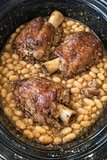
Place the rinsed navy beans at the bottom of a 5- to 6-quart slow cooker. Nestle the browned pork shanks on top of the beans so they sit snugly. Pour in 6 cups of water (ensuring beans are submerged) and add the salt, gently stirring around the beans.
4.Cover and Cook :Low & slow braising process.
Cover with the lid and cook on LOW for 8–10 hours, or until the navy beans are very tender and the pork shanks are fall-off-the-bone soft.
5.Midway Liquid Check :Maintain moisture level.
Around the 4–5 hour mark, check the liquid level. If the beans are no longer submerged, add just enough hot water to cover them again by about 1/2 inch. Avoid adding too much to maintain a thick consistency.
6.Season and Thicken :Adjust consistency before serving.
Taste the liquid and add more salt if needed. If the sauce is thin, run the slow cooker uncovered on HIGH for 20–30 minutes, or mash a small handful of beans against the side of the crock and stir back in to thicken.
Serving Suggestions & Storage
Food Science Insight: As pork shanks cook slowly, the collagen in the connective tissue and bones breaks down into gelatin. Combined with the starches released from the navy beans, this turns simple water into a thick, silky, flavor-rich sauce.
Serving Ideas
-
Plating: Ladle into wide bowls, making sure each portion gets a shank (or generous chunks of meat) and plenty of creamy beans.
-
Sides: Pair with steamed cabbage, sautéed greens, or a basic lettuce salad for freshness.
-
For Dipping: Serve with crusty bread, cornbread, or plain toast to soak up the savory liquid.
-
Table Condiments: Offer black pepper, a splash of vinegar, or chopped raw onion for a sharp contrast to the rich broth.
Storage & Safety
-
Cooling: Transfer leftovers to shallow containers and refrigerate within 2 hours of cooking.
-
Reheating: Reheat gently on the stovetop or in the microwave with a splash of water. The broth will continue to thicken overnight.
-
Cooking Temperature: Always cook dried beans on LOW or HIGH settings—never on WARM—to ensure they reach a safe cooking temperature.
Recipe Variations
-
Alternate Cuts: Pork hocks or neck bones can be swapped in for some or all of the shanks.
-
Smoky Profile: Replace part of the salt with a piece of smoked pork (like a ham hock).
-
Brothier Version: Add up to 2 extra cups of water to serve as a soup over day-old bread.
For Complete Cooking STEPS Please Head On Over To Next Page Or Open button (>)
ADVERTISEMENT
ADVERTISEMENT