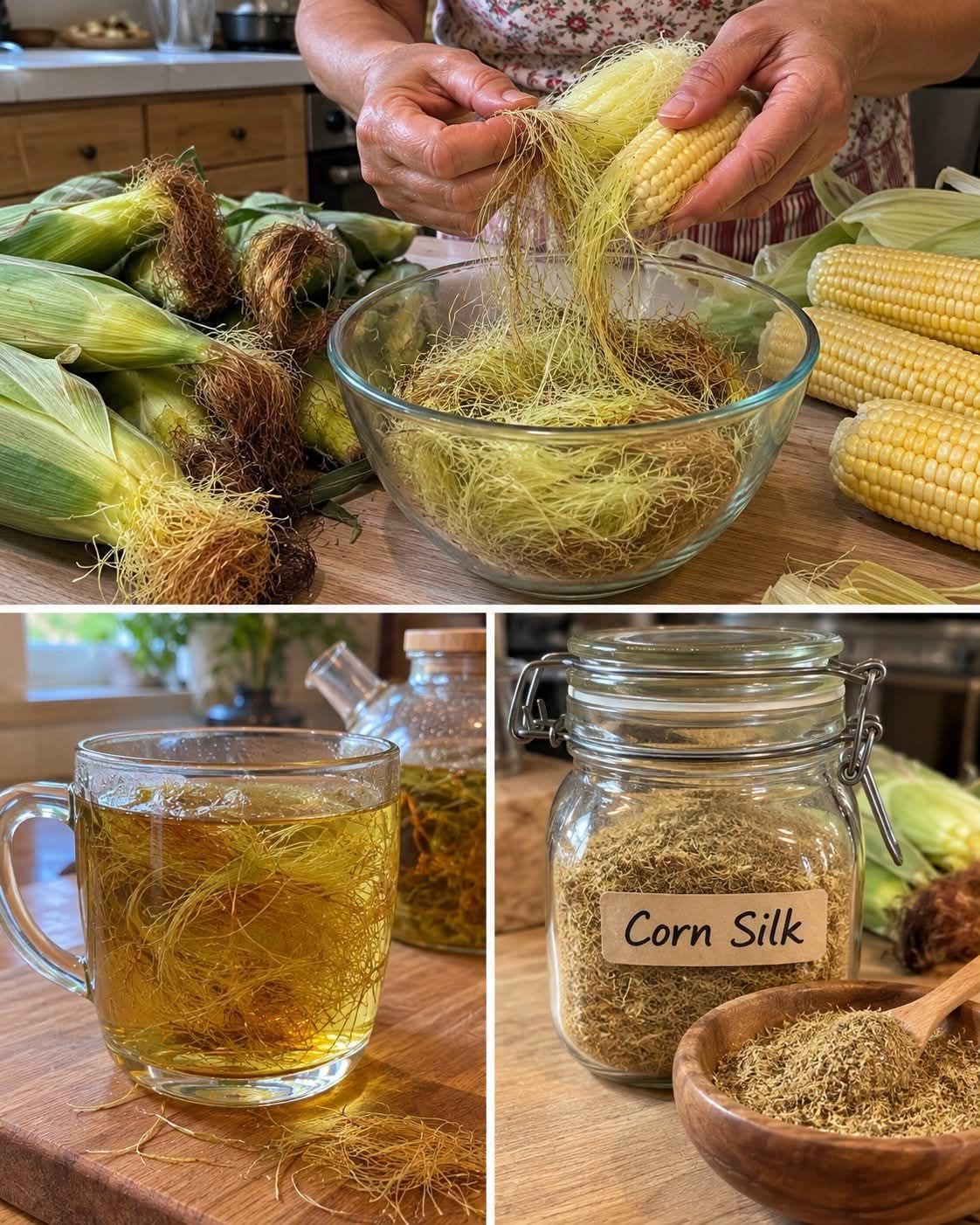
When people prepare fresh corn, they usually remove the silky threads surrounding the cob and throw them away. But did you know that corn silk has a long history of use in traditional herbal practices?
These fine, golden strands, found beneath the green husks of corn, have traditionally been used to prepare herbal teas and other botanical remedies. Although they are often overlooked, corn silk contains several plant compounds that researchers continue to study.
Let’s explore what corn silk is, how it has traditionally been used, and what science says about its potential benefits.
🌽 What Is Corn Silk?
Corn silk consists of the long, soft threads that grow from the top of an ear of corn. Botanically, these strands are part of the female flower structure and help capture pollen during the plant’s reproductive process.
In traditional herbal practices, corn silk has been collected, dried, and steeped in hot water to make a mild herbal infusion.
It contains various plant compounds, including flavonoids and other substances with antioxidant activity in laboratory studies. However, the presence of these compounds does not automatically establish that corn silk tea can treat a medical condition.
🍵 1. Traditionally Used for Urinary Health
One of the best-known traditional uses of corn silk is in herbal preparations intended to support urinary health.
Some traditional practices have used corn silk tea as a mild diuretic, meaning a substance believed to increase urine production. However, high-quality human studies are limited, and there is insufficient evidence to confirm its effectiveness for urinary tract problems.
Corn silk tea should not be used as a substitute for medical evaluation when symptoms such as painful urination, fever, blood in the urine, or persistent urinary discomfort occur.
🌿 2. A Source of Antioxidant Compounds
Corn silk contains plant compounds, including flavonoids and phenolic substances, that have demonstrated antioxidant activity in laboratory research.
Antioxidants help protect cells from oxidative damage. Nevertheless, more research is needed to determine whether drinking corn silk tea provides meaningful health benefits in humans.
A varied diet containing vegetables, fruits, legumes, and whole grains remains a reliable way to obtain beneficial plant compounds.
💧 3. Its Traditional Connection to Fluid Balance
Because corn silk has traditionally been associated with increased urination, some people use it in herbal teas intended to support fluid balance.
However, there is not enough reliable clinical evidence to recommend corn silk for treating swelling, fluid retention, or kidney conditions.
People with kidney or heart disease, or anyone taking diuretics, should consult a healthcare professional before trying herbal products that might affect fluid balance.
🌱 4. Potential Anti-Inflammatory Properties
Certain compounds found in corn silk have shown potential anti-inflammatory effects in preliminary laboratory and animal studies.
These findings are interesting, but they do not prove that corn silk tea reduces inflammation or treats inflammatory diseases in people. More well-designed human studies are needed.
🍵 How to Make Traditional Corn Silk Tea
For Complete Cooking STEPS Please Head On Over To Next Page Or Open button (>)